Open enrollment is more than an opportunity to choose your health insurance for the year ahead. It can also be a helpful reminder to review your broader employee benefits and make sure they still align with your current circumstances. Major life changes, new financial priorities, or reaching certain age milestones can all affect the choices available to you.
As you prepare for this year's open enrollment, take a few minutes to review these three areas and make sure your benefits and elections continue to support your financial plan.
Changes to Your Family or Household
Health insurance needs can change when you add or remove a dependent from your coverage. For example, parents with a new child will want to make sure their new family member is properly covered, while a dependent reaching age 26 may no longer be eligible for coverage under a parent's plan. A spouse changing jobs or leaving the work force can also create new options. During open enrollment, compare both spouse’s employer-sponsored plans, including premiums, deductibles, and out-of-pocket costs, to determine which coverage combination makes the most sense for your family.
It can also be helpful to look beyond the monthly premiums when comparing plans. A plan with a lower premium may have a higher deductible or out-of-pocket maximum, while a plan with a higher premium may provide more predictable costs throughout the year. Consider your family's expected healthcare needs, including regular prescriptions, ongoing appointments, or planned procedures when deciding which coverage makes sense.
Changes to Your Age or Health
Certain milestones and health changes can also make it worth reevaluating your coverage. Turning 65 brings Medicare eligibility, so it's important to consider how Medicare may coordinate with existing employer coverage and whether your current plan remains appropriate. A significant change in health, a new diagnosis, or anticipated medical expenses can also affect which plan makes sense for the coming year.
When reviewing your elections, consider not only the monthly premium but also your expected healthcare costs, out-of-pocket exposure, and whether you are eligible to contribute to a Health Savings Account (HSA). If you are eligible for an HSA, also review your contribution election and determine whether increasing your contributions could make sense as part of your overall savings strategy.
Major family changes are a good reason to review your beneficiary designations. Marriage, divorce, the birth or adoption of a child, or the death of a previously named beneficiary can all warrant an update. Even if nothing has changed recently, it's worth confirming that the people listed on your accounts still reflect your wishes.
Look at the beneficiary designations on your 401(k), IRAs, life insurance policies, HSAs, and other accounts that allow beneficiaries. These designations can play an important role in determining who receives your assets, and they may not automatically change when your circumstances do. It's also important to review both primary and contingent beneficiaries to make sure your designations still reflect your intentions. While open enrollment may be focused on your employer benefits, it can also serve as a helpful annual reminder to review these designations and make sure they remain consistent with your overall estate plan.
Catch-up contributions allow individuals who have reached certain ages to contribute additional money to their tax-advantaged plans beyond the standard annual contribution limit. For most 401(k), 403(b), and governmental 457(b) plans, if you turn 50 during the year, you may be eligible to contribute an additional $8,000 through catch-up contributions. If you turn 60–63 during the year, you may be eligible for a higher catch-up contribution limit in 2026. HSA plan contributions, which typically can only be changed during open enrollment, also offer an increased contribution for those 55 and older.
Reaching the eligible age does not necessarily mean your contribution election will automatically increase. Check your employer's retirement plan to confirm that catch-up contributions are available and review your current contribution rate. If you are eligible and your cash flow allows, increasing your retirement contributions can be an opportunity to put more money toward your long-term retirement goals.
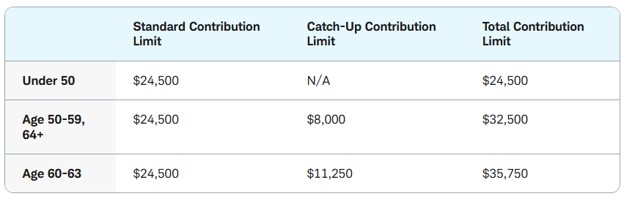
*2026 401(k) contribution limits from Charles Schwab
Open enrollment is a good opportunity to make sure your benefits continue to keep pace with your life, your finances, and your long-term goals. If you are unsure whether your current elections still make sense, consider reviewing them with your financial planner. They can help you evaluate your options and coordinate your employee benefits with the rest of your financial plan.
Tags:
Reach out today. This could be the start of a great relationship.
Contact Us


